
A dental plate is a term commonly used for removable replacement teeth, particularly a full denture. You may also hear someone call a partial denture a plate when it replaces several missing teeth. In the dental office, we more often use terms like full denture or partial denture, which tell us more about the type of appliance someone is wearing or needs. The word plate also describes something you can actually see in a traditional denture. Replacement teeth are attached to a broad base that rests against your gums. With a full upper denture, the base typically extends across the roof of your mouth.
Over time, the term plate became a common way to refer to the entire appliance, not just the base underneath the teeth. The base is there for a reason: traditional dentures rely on close contact with the gums and surrounding tissues to help stay in place. At Atkins Dental Clinic, we assess the support your replacement teeth need, how much of the traditional plate still serves a purpose, and whether dental implant support could create a different kind of fit.
Why Does a Dental Plate Cover So Much of Your Mouth?
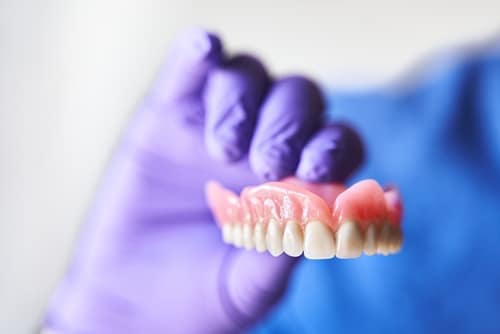
A traditional dental plate stays in place by fitting closely against the gums and other supporting tissues in the mouth. For a full upper denture, that means the acrylic base extends across the roof of your mouth. The palate provides a broad, firm surface for the denture to rest against, while close contact with the tissues and a seal around the denture contribute to its retention.
A lower denture has far less room to move without extending across the floor of your mouth. The reason for this is that it must make space for the tongue. The denture has less surface area to rest on and must move with your tongue, cheeks, and other soft tissues. For some denture wearers, keeping a lower plate steady can be one of the more noticeable limitations of relying on the mouth for support.
Why Your Dental Plate May Not Fit Like It Used To
When we make a traditional denture, we shape the base to fit the contours of your mouth at that time. The close relationship between those two surfaces is part of what gives a dental plate its support. Yet only one of those surfaces stays relatively unchanged.
Your gums and jaw continue to respond to tooth loss after the denture is made. Without natural tooth roots, the jawbone can gradually lose volume, which can alter the shape of the tissues covering it. A plate made for an earlier contour may eventually have more room to move, rock under pressure, or press in areas where it didn’t before.
A reline can sometimes restore closer contact by reshaping the denture surface that rests against your gums. Adjustments can address specific areas of pressure or irritation. Those changes can improve the relationship between the plate and the mouth beneath it, but the denture still depends on that relationship for much of its support.
It’s worth considering how much you want your replacement teeth to depend on that changing foundation. For some people, maintaining a removable denture works well. For others, repeated movement or changes in fit raise a different question: can the replacement teeth draw support from something more stable than the gums alone?
Adding Dental Implant Support to Your Denture
Dental implants can reduce how much replacement teeth rely on the gums and palate to stay in place. Dr. Aaron uses mini dental implants to provide several levels of support. The replacement teeth can be designed to match them.
- Snap-on denture: This option is still removable but attaches to mini implants for added retention, so you can take it out yourself for cleaning. An upper snap-on denture may also be designed without covering the entire palate.
- Semi-removable roundhouse bridge: A roundhouse bridge replaces a full arch of teeth and is also supported by mini implants. You do not remove it at home. Only Dr. Aaron can remove the bridge during professional cleanings when necessary. Its horseshoe-shaped design replaces the broad plate and palate coverage associated with a conventional upper denture.
- Fixed roundhouse bridge: Dr. Aaron can also secure a roundhouse bridge to mini implants, so it remains permanently fixed in place.
Is Your Current Denture Still Working for You?
Replacing teeth does not have to mean accepting one standard denture design. How your replacement teeth are supported can shape how they fit and function. Dr. Aaron offers both conventional dentures and mini implant-supported options at Atkins Dental Clinic. Your treatment can be built around the kind of support you want from your replacement teeth.
If you are ready to see what is possible beyond your current denture, schedule a free implant consultation today.
