

When people think about clear aligners, they usually picture smooth, transparent trays that fit over the teeth. What often comes as a surprise is that many aligner treatments also rely on small additions placed directly on the teeth. These are called clear aligner attachments. Attachments are small, tooth-colored pieces of composite resin that we bond to certain teeth at the start of clear aligner treatment. Each is intentionally placed and appears as a smooth, subtle bump, typically no larger than a grain of rice. Attachments give clear aligners greater control over tooth movement. They help direct pressure where needed, keeping treatment on track. But if attachments improve control, how can clear aligners function without them? In many situations, aligners without attachments are still very effective. The key difference depends on how your teeth need to move during treatment, which we carefully evaluate at Atkins Dental Clinic.
Attachment-Free Clear Aligners: Are They Effective?
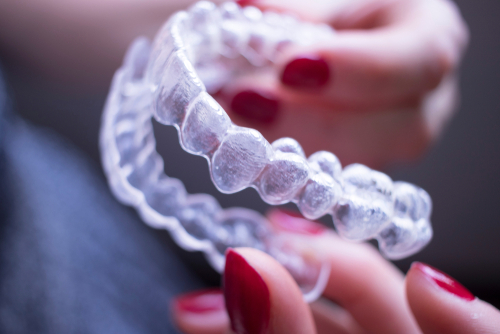
Attachment-free clear aligners can be effective when used for the right types of tooth movement. Even without glued attachments, these aligners still apply carefully controlled pressure. Their success depends on careful planning and precise fit, not on extra pieces bonded to the teeth.
Instead of using small bonded bumps to help move teeth, attachment-free aligners rely on the tray’s shape and structure. The plastic is intentionally contoured to apply pressure to specific areas of each tooth. When only smaller, milder changes are needed, this guidance is often enough to move teeth safely and gradually.
Attachment-free aligners work best for mild to moderate alignment concerns, including:
- Minor crowding
- Small gaps
- Mild rotations
- Mild tipping of front teeth
What Can I Expect From Clear Aligner Treatment?
Clear aligner treatment straightens your teeth gradually using a series of custom-made plastic trays. Dr. Bratton designs each tray to move your teeth a small amount at a time. You switch trays on a set schedule, allowing steady progress instead of sudden change.
Each aligner is molded slightly ahead of your current tooth position. When you place it over your teeth, it fits snugly and applies gentle pressure. That pressure aligns teeth over time. With attachment-free clear aligners, the tray itself does the work. Subtle shaping in the plastic, such as thicker areas or small ridges along the edges, helps focus pressure where movement is needed. This allows tipping or uprighting of teeth without relying on glued attachments.
You may notice pressure when starting a new tray. That sensation is expected and usually fades within a day or two. Dr. Bratton monitors how your teeth respond and adjusts the plan as needed. Comfort, movement speed, and overall results depend on your specific case and whether attachments are part of your treatment plan.
The Clear Aligner Process
Clear aligner treatment follows a predictable, step-by-step process. When your case is suitable for attachment-free aligners, Dr. Bratton can guide tooth movement using tray design alone. When more control is needed, attachments may be added.
- Planning your treatment: Dr. Bratton examines your teeth, takes detailed 3D scans, and designs a custom series of aligners. You can see how your teeth are expected to move throughout treatment.
- Starting with your aligners: You receive your first set of trays and try them on in the office. Dr. Bratton checks the fit and explains how to wear and care for them. You wear your aligners for about 20 to 22 hours each day, removing them for eating and drinking.
- Progressing through the trays: You switch to a new set of aligners on a regular schedule. Each tray builds on the last by applying controlled pressure to continue moving your teeth. You return for check-ins so Dr. Bratton can track progress and make adjustments if needed.
- Refining the alignment: Some cases require additional trays to fine-tune tooth position. If refinements are necessary, Dr. Bratton will update your treatment plan to keep everything on track.
Are Attachment-Free Clear Aligners Right for You?
Clear aligner treatment can be planned in different ways. Certain cases benefit from attachments, while others achieve predictable results without them. At Atkins Dental Clinic, Dr. Bratton uses digital scans and a full evaluation to determine how much control your teeth need and whether attachment-free clear aligners are appropriate for your case.
Schedule a consultation to review your options and understand how clear aligner treatment would be tailored to you.
